Detergent Smells: Science, Safety & Scent Selection

The scent of freshly laundered clothes carries more significance than simple pleasantness. Detergent smells influence purchasing decisions, affect indoor air quality, and can impact the health and wellbeing of everyone who encounters laundered fabrics. Understanding the chemistry, psychology, and safety considerations behind these fragrances helps consumers and commercial operators make informed choices that balance effectiveness with responsibility. As awareness grows around environmental health and chemical sensitivities, the conversation around detergent fragrances has evolved from preference to priority.
The Chemistry Behind Detergent Smells
Detergent fragrances represent complex formulations containing dozens or even hundreds of individual chemical compounds. These volatile organic compounds (VOCs) evaporate at different rates, creating layered scent profiles that unfold over time.
How Fragrance Molecules Work
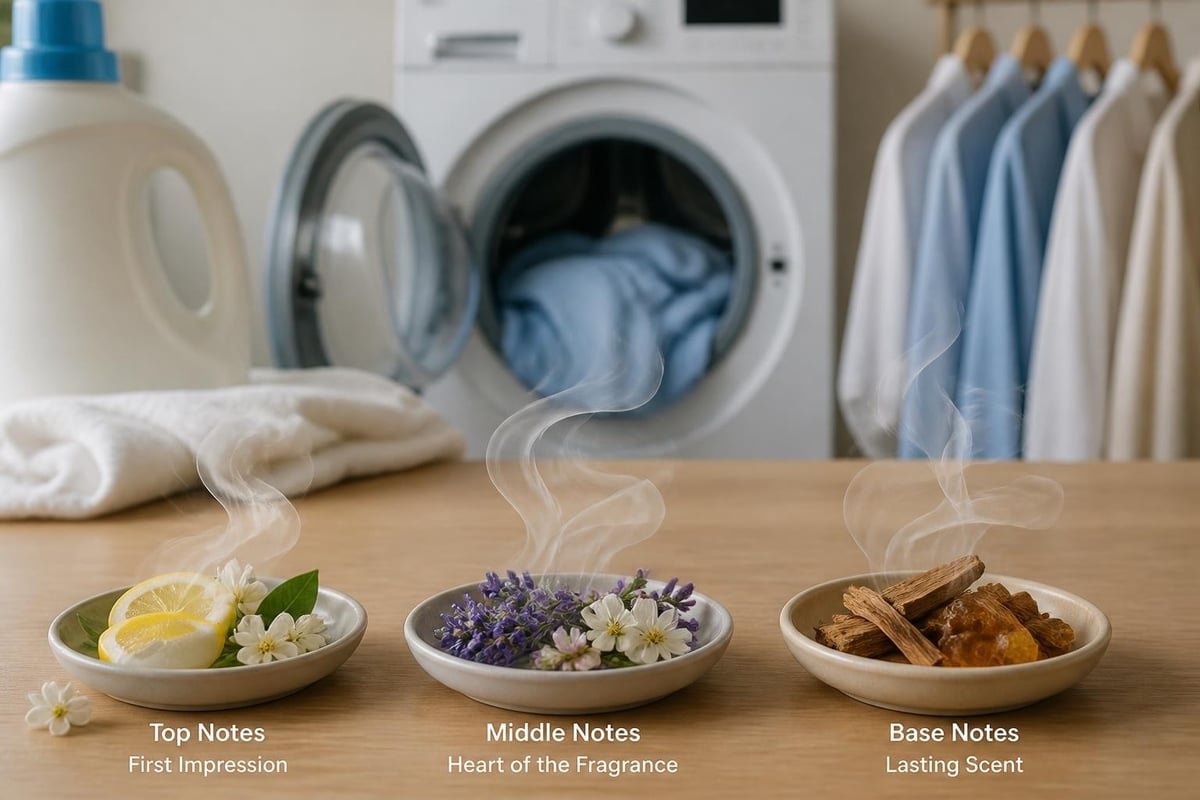
The chemistry of detergent smells involves three distinct scent stages:
- Top notes evaporate quickly, providing the initial impression when opening a package
- Middle notes emerge during washing and form the primary scent character
- Base notes linger on fabrics longest, creating the lasting "clean laundry" smell
Modern formulations incorporate fixatives that help fragrance molecules bond with fabric fibers, extending scent longevity beyond the wash cycle. Research into odor strength prediction using machine learning now enables manufacturers to design more targeted fragrance profiles with greater precision.
Synthetic Versus Natural Fragrance Components
The debate between synthetic and natural fragrances continues to shape product development. Synthetic compounds offer consistency, stability, and cost-effectiveness. Natural essential oils provide botanical authenticity but vary in quality and potency based on growing conditions and extraction methods.
| Fragrance Type | Advantages | Considerations |
|---|---|---|
| Synthetic | Consistent performance, hypoallergenic options available, lower cost | May contain phthalates, less "authentic" perception |
| Natural | Botanical origin, marketing appeal, biodegradable | Variable quality, higher allergen potential, premium pricing |
| Hybrid | Balanced performance, combines benefits | Requires careful formulation, moderate cost |
The shift toward eco-friendly laundry solutions reflects growing demand for fragrances derived from responsible sources without compromising cleaning power.
Health and Safety Considerations
Understanding detergent smells extends beyond preference into genuine health concerns. The American Lung Association notes that fragrances in detergents can affect indoor air quality, particularly for individuals with respiratory sensitivities.
Respiratory Impact and Allergic Reactions
Fragrance chemicals become airborne during washing, drying, and when wearing laundered garments. These airborne compounds can trigger responses in sensitive individuals:
- Respiratory irritation and coughing
- Headaches and dizziness
- Skin contact dermatitis
- Asthma exacerbation
Research indicates that fragrances affect health through multiple exposure pathways, making fragrance selection critical for households with vulnerable populations. Commercial facilities serving healthcare, childcare, or senior populations face particular responsibility in choosing appropriate products.
Allergen Disclosure and Transparency
The European Union requires disclosure of 26 specific fragrance allergens above certain concentration thresholds. Studies examining fragrance allergens in household detergents reveal that common sensitizers appear frequently in conventional products. Transparency in ingredient listing enables informed decision-making for consumers managing allergies or sensitivities.
Modern capsule formulations can reduce fragrance exposure during handling since the concentrated detergent remains sealed until dissolution, minimizing direct contact and airborne particles during dispensing.
Cultural and Personal Preferences
Detergent smells carry cultural significance that varies globally. Fragrance preferences reflect regional traditions, climate considerations, and social expectations around cleanliness.
Regional Scent Preferences
Different markets demonstrate distinct fragrance preferences:
- North American markets favor fresh, clean scents with floral or citrus notes
- European consumers often prefer subtle, sophisticated fragrances or fragrance-free options
- Asian markets show preference for delicate, powdery scents with minimal intensity
- Latin American regions embrace bold, long-lasting fragrances with tropical influences
Research into perfume usage patterns among Filipino consumers reveals how cultural identity shapes fragrance expectations, insights that translate directly to detergent scent development.
The Psychology of Clean
The connection between detergent smells and perceived cleanliness operates on psychological rather than functional levels. Fragrance serves as a sensory signal that laundering has occurred, regardless of actual cleaning efficacy. This perception drives significant purchasing behavior.
Studies exploring personalized fragrance recommendation using Bayesian algorithms demonstrate that individual personality traits correlate with scent preferences, suggesting opportunities for more targeted product development. Understanding these psychological drivers helps commercial operators select products that satisfy customer expectations while maintaining cleaning standards.
Commercial Applications and Professional Considerations
Commercial laundry operations face unique challenges regarding detergent smells. Hotels, gyms, healthcare facilities, and laundromats must balance client satisfaction, health safety, and operational efficiency.
Volume and Ventilation Challenges
Commercial facilities process substantially higher laundry volumes than residential settings, concentrating fragrance exposure. Proper ventilation becomes essential to maintain acceptable air quality for staff and customers. Facilities lacking adequate air exchange may need to prioritize low-fragrance or fragrance-free formulations.
The economics of commercial detergent selection extend beyond per-load costs. Laundromat operators increasingly recognize that consistent scent delivery without waste improves customer satisfaction while controlling costs.
Specialty Fabric Considerations
Different fabric types interact with fragrances distinctively. Athletic wear and performance fabrics present particular challenges:
- Synthetic fibers trap odor molecules differently than natural fibers
- Moisture-wicking materials may amplify or diminish fragrance retention
- Technical fabrics require specialized treatment to prevent buildup
Athletic-specific formulations address these concerns by combining odor elimination with appropriate fragrance levels that don't overwhelm synthetic materials.
Fragrance-Free and Low-Scent Alternatives
The rising demand for fragrance-free detergents reflects both health awareness and preference for minimalism. These products remove added fragrances while maintaining cleaning performance.
Benefits of Reducing Fragrance Load
Choosing low-fragrance or fragrance-free options provides several advantages:
- Reduced allergic reaction potential
- Lower environmental impact from volatile compounds
- Compatibility with multiple sensitivities
- Professional settings requiring scent neutrality
Healthcare facilities, schools, and shared residential buildings increasingly establish fragrance-free policies to accommodate diverse populations. Commercial providers serving these markets must prioritize products meeting these specifications.
Achieving Freshness Without Fragrance
Effective cleaning without added fragrance requires focusing on odor elimination rather than masking. This approach targets the source compounds causing unpleasant smells rather than covering them with additional scents. Enzymatic treatments, oxygen-based brighteners, and effective soil removal create genuinely fresh fabrics without fragrance overlays.
Innovation in Sustainable Fragrance Development
Environmental consciousness drives innovation in how manufacturers approach detergent smells. Sustainable fragrance development considers entire lifecycles from sourcing through disposal.

Biodegradable Fragrance Compounds
Traditional fragrance molecules may persist in waterways, accumulating in aquatic ecosystems. Research into QSAR-guided generative frameworks for discovering new odorants enables development of compounds that deliver desired scent profiles while breaking down more readily in the environment.
Sustainable fragrance ingredients share these characteristics:
- Rapid biodegradation in wastewater treatment
- Renewable or upcycled source materials
- Minimal aquatic toxicity
- Reduced volatile organic compound emissions
Companies committed to eco-friendly formulations prioritize these ingredients without sacrificing fragrance quality or longevity.
Concentration and Waste Reduction
Concentrated formulations reduce packaging, transportation impacts, and storage requirements. This efficiency extends to fragrances, where higher-quality compounds at lower concentrations deliver equivalent sensory results with reduced environmental burden.
Single-dose capsules eliminate overdosing common with liquid or powder formats, ensuring precise fragrance delivery per load. This accuracy prevents both waste and excessive fragrance exposure.
Safety Guidelines and Best Practices
Managing detergent smells safely requires understanding both product selection and usage practices. Following established guidelines protects health while maximizing performance.
Proper Storage and Handling
Detergents containing fragrances require appropriate storage to maintain quality and prevent excessive exposure:
- Store in cool, dry locations away from direct sunlight to preserve fragrance stability
- Keep containers sealed between uses to prevent fragrance volatilization
- Maintain separation from food storage areas to prevent cross-contamination
- Follow expiration guidelines as fragrances degrade over extended periods
The National Capital Poison Center provides guidance on preventing accidental exposure, particularly important for households with children or pets.
Dosage and Dilution Considerations
Using excessive detergent doesn't improve cleaning but does increase fragrance exposure unnecessarily. Pre-measured formats ensure appropriate dosing while reducing operational costs in commercial settings.
| Load Size | Liquid (oz) | Powder (tbsp) | Capsule |
|---|---|---|---|
| Small | 1.5 | 2 | 1 |
| Medium | 2.5 | 3 | 1 |
| Large | 3.5 | 4 | 2 |
| Extra Large | 4.5 | 5 | 2 |
Proper dosing delivers optimal fragrance levels without residue buildup that can cause skin irritation or fabric deterioration.
Selecting the Right Fragrance Profile
Choosing appropriate detergent smells requires balancing multiple factors including user preferences, fabric types, and environmental considerations. Systematic evaluation improves outcomes.
Assessment Framework
Consider these elements when selecting fragranced detergents:
- User population: Age, health status, sensitivities, cultural preferences
- Facility type: Residential, commercial, institutional, healthcare
- Fabric mix: Natural fibers, synthetics, blends, specialty materials
- Ventilation capacity: Air exchange rates, outdoor access, filtration systems
- Budget constraints: Cost per load, storage requirements, waste factors
This comprehensive approach ensures selections align with operational realities while meeting stakeholder expectations. Choosing detergent based on lifestyle needs extends these principles to individual households.
Testing and Transition Strategies
Introducing new detergent fragrances benefits from controlled testing before full implementation:
- Sample small batches to assess scent intensity and longevity
- Gather feedback from diverse user groups
- Evaluate performance on representative fabric types
- Monitor for any adverse reactions or complaints
- Adjust selections based on comprehensive results
Gradual transitions minimize disruption while allowing refinement based on real-world performance data.
Regulatory Landscape and Compliance
Fragrance regulations vary by jurisdiction, affecting product availability and labeling requirements. Understanding applicable standards ensures compliance and informed selection.
Current Regulatory Requirements
Different regions enforce varying disclosure standards:
- United States: Limited mandatory disclosure; voluntary participation in fragrance allergen programs
- European Union: Required listing of 26 specific allergens above concentration thresholds
- Canada: Gradual implementation of enhanced disclosure requirements
- California Proposition 65: Warning requirements for specific fragrance chemicals
Staying current with evolving regulations protects organizations from liability while demonstrating commitment to transparency. Products meeting rigorous certification standards provide additional assurance beyond minimum requirements.
Future Regulatory Trends
Anticipated regulatory developments include expanded allergen disclosure, restrictions on certain synthetic musks, and enhanced environmental reporting. Forward-thinking organizations adopt products exceeding current requirements to minimize future compliance burdens.
Environmental Impact Beyond the Wash
The environmental footprint of detergent smells extends well beyond the washing machine. Understanding these broader impacts informs more sustainable choices.
Wastewater Treatment Challenges
Fragrance compounds entering wastewater systems undergo varying degrees of breakdown during treatment. Some molecules pass through treatment facilities relatively intact, accumulating in receiving waters. This persistence raises concerns about aquatic ecosystem impacts and potential bioaccumulation.
Selecting fragrances designed for biodegradability reduces downstream environmental effects. Modern capsule technology often incorporates more environmentally responsible fragrance compounds as part of comprehensive sustainability strategies.
Air Quality and VOC Emissions
Volatile organic compounds from fragrances contribute to indoor and outdoor air quality issues. During drying, especially in high-temperature commercial dryers, fragrance volatilization intensifies. Facilities with multiple dryers operating simultaneously can generate significant VOC emissions.
Choosing low-VOC fragrances, improving ventilation, or selecting fragrance-free alternatives reduces air quality impacts. These measures benefit staff health, regulatory compliance, and community relations.
Understanding detergent smells requires balancing science, safety, preference, and environmental responsibility. From fragrance chemistry to health considerations and cultural preferences, informed selection creates better outcomes for users and the planet. If you're ready to experience powerful cleaning performance with thoughtfully formulated fragrances in an innovative, sustainable format, discover how Laundry Labs combines commercial-grade effectiveness with eco-conscious design in convenient all-in-one capsules that simplify your laundry routine.