


Laundry Pods Explained: How All-in-One Pods Work

Laundry pods all work the same basic way: a pre-measured dose of concentrated detergent sits inside a water-soluble film that dissolves in the wash and releases its contents into the load. According to Consumer Reports, pods contain a premeasured combination of cleaning agents inside a water-soluble membrane. The differences between brands come down to what is inside that film, how much of it there is, and how well it performs in your machine.
What Is Inside a Laundry Pod?
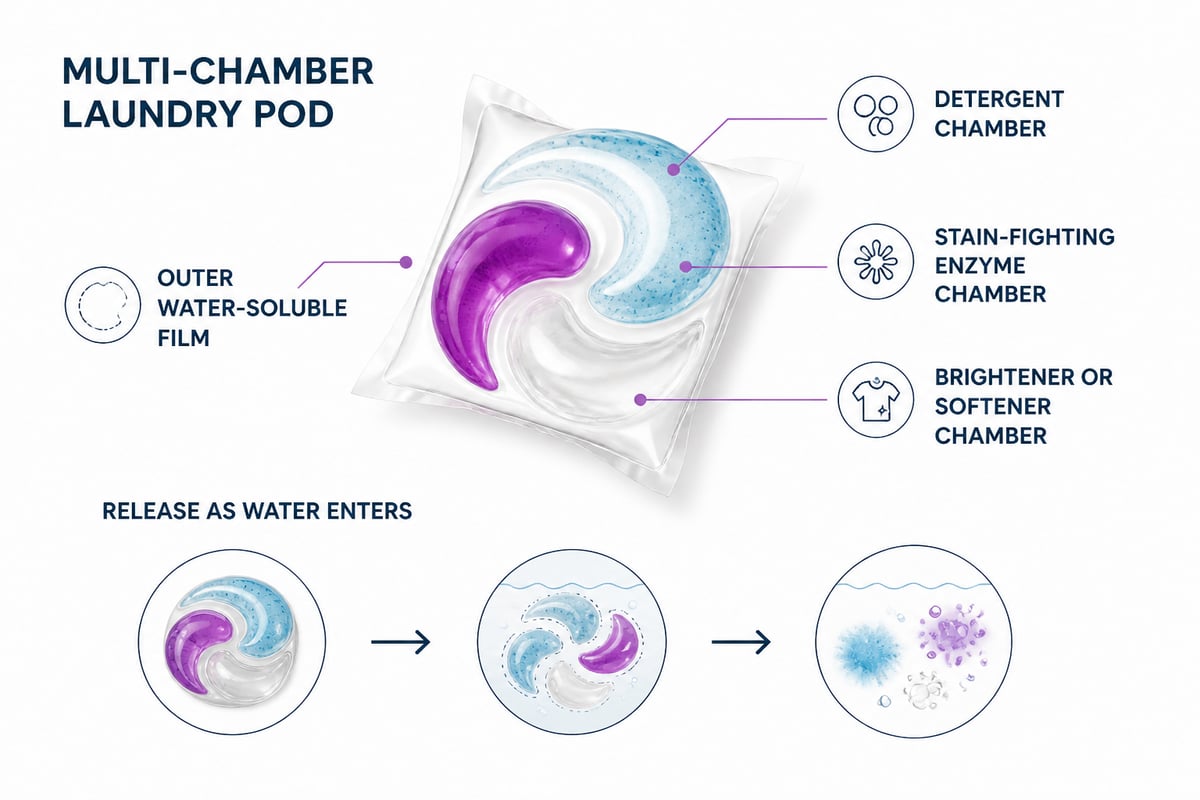
A laundry pod is a small packet of concentrated cleaning agents wrapped in a thin film that breaks apart on contact with water. Poison Control describes the packet as concentrated detergent wrapped in material that lets water enter and break apart the package, releasing the detergent into the wash. Some pods hold liquid detergent, some hold powder, and some hold a combination of both.
Most pods use one or more compartments. A basic single-chamber pod contains detergent alone. A multi-chamber pod separates ingredients that would react poorly if stored together, such as enzymes and brighteners, so each is released in the right order during the cycle.
Typical contents include:
- Surfactants that lift oils and soil from fabric
- Enzymes that break down protein, starch and fat stains
- Brighteners or whitening agents that keep whites from looking dull
- Softening agents in select formulas
- Odor-control and fragrance components
The film itself is usually polyvinyl alcohol, often shortened to PVA or PVOH. The Wirecutter overview of plastic in detergent pods summarizes the ongoing debate about what that film is made of and how it breaks down, which is worth reading if environmental impact is part of your buying decision.
How Do All-in-One Pods Work in the Wash?
An all-in-one pod works by dissolving its film as the drum fills with water, then releasing detergent, stain treatment and other additives in sequence throughout the cycle. The film starts breaking down within the first minutes of contact with water, so placement matters. If the pod lands directly in the drum under your clothes, it is exposed to moving water right away.
Tide states that its pods combine detergent, stain remover and brightening ingredients in one dose and are designed for any machine and water temperature, including cold water, per the Tide usage guide. The same principle holds across the category: a pod formulated for cold water relies on a film and surfactant system that dissolves without heat.
A "5-in-1" or "all-in-one" label typically means the pod handles several jobs at once. Those jobs usually include cleaning, stain removal, brightening, softening and odor control. A pod that adds a softening step removes the need for a separate fabric softener, which simplifies the routine and removes one more product to stock.
How Many Laundry Pods Do You Actually Need?
For most loads, one pod is enough. A standard medium load calls for a single pod, a very large or heavily soiled load may need two, and a small load can often be done with one pod or less if the manufacturer permits it. Always follow the dosing instructions printed on the package, because concentration varies by formula.
A practical dosing guide:
- Small or lightly soiled load: one pod
- Medium to large load: one pod
- Extra-large load or heavy soil: two pods, only if the label allows it
- Washers with very large drums: check the label for a two-pod instruction
Using more than the label recommends rarely improves results. Excess detergent can leave residue on fabric and inside the machine, which is why pre-measured dosing is one of the main advantages of the format. For operators weighing the economics, the Laundry Labs breakdown of detergent cost per cycle shows why measuring precisely matters at volume.
Where Should You Put Detergent Pods in a Front-Load Washer?
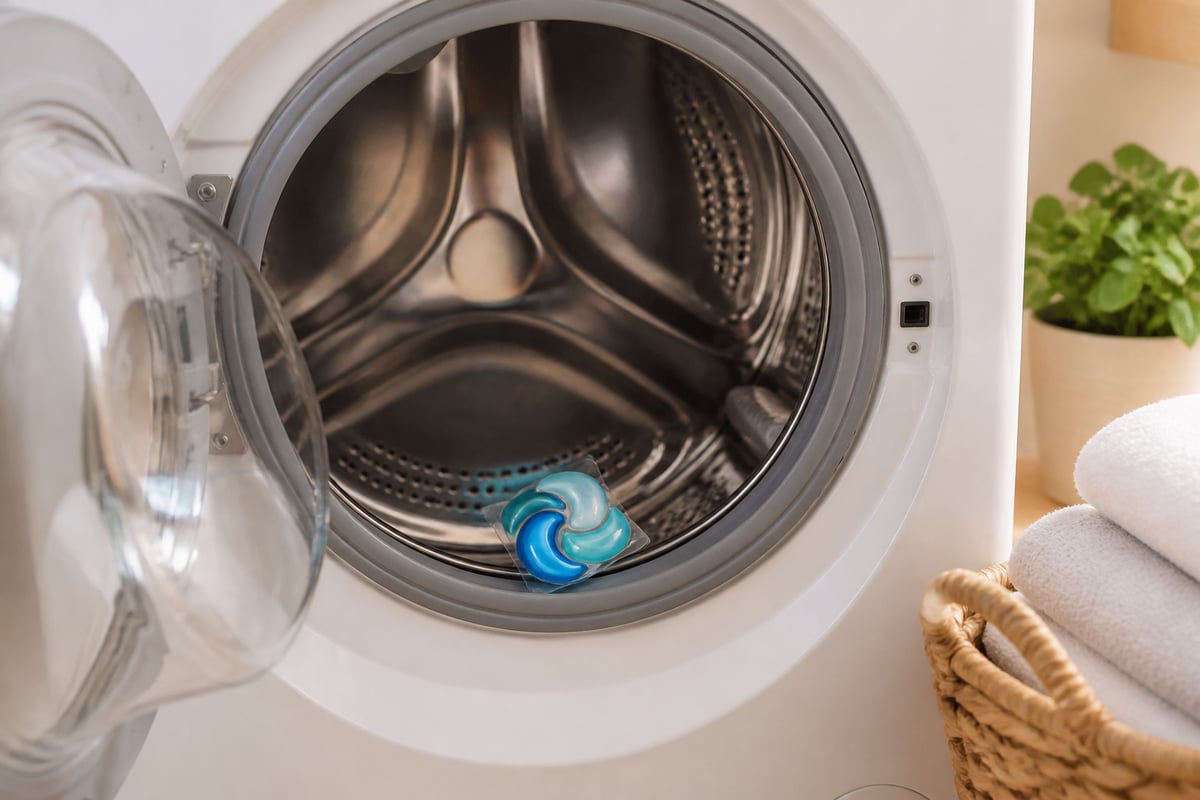
Place the pod at the back of the empty drum, then add clothes on top. Do not put the pod in the dispenser drawer, because the drawer is designed for liquid and powder that is flushed in with water, and a pod can stay stuck there without dissolving fully.
Follow this order every time:
- Open the door and drop the pod into the empty drum, toward the back.
- Load clothes over the pod so it stays against the drum wall.
- Close the door and select your cycle.
- Start the wash.
The same placement works in top-load washers. Putting the pod in first, before the water starts, lets it dissolve fully and mix evenly. Tossing it on top of a packed load can leave it wedged in a fold where little water reaches it.
For a deeper walkthrough, the Laundry Labs guide on how to use detergent pods covers placement and common mistakes.
Pods vs. Liquid and Powder: How Do They Compare?
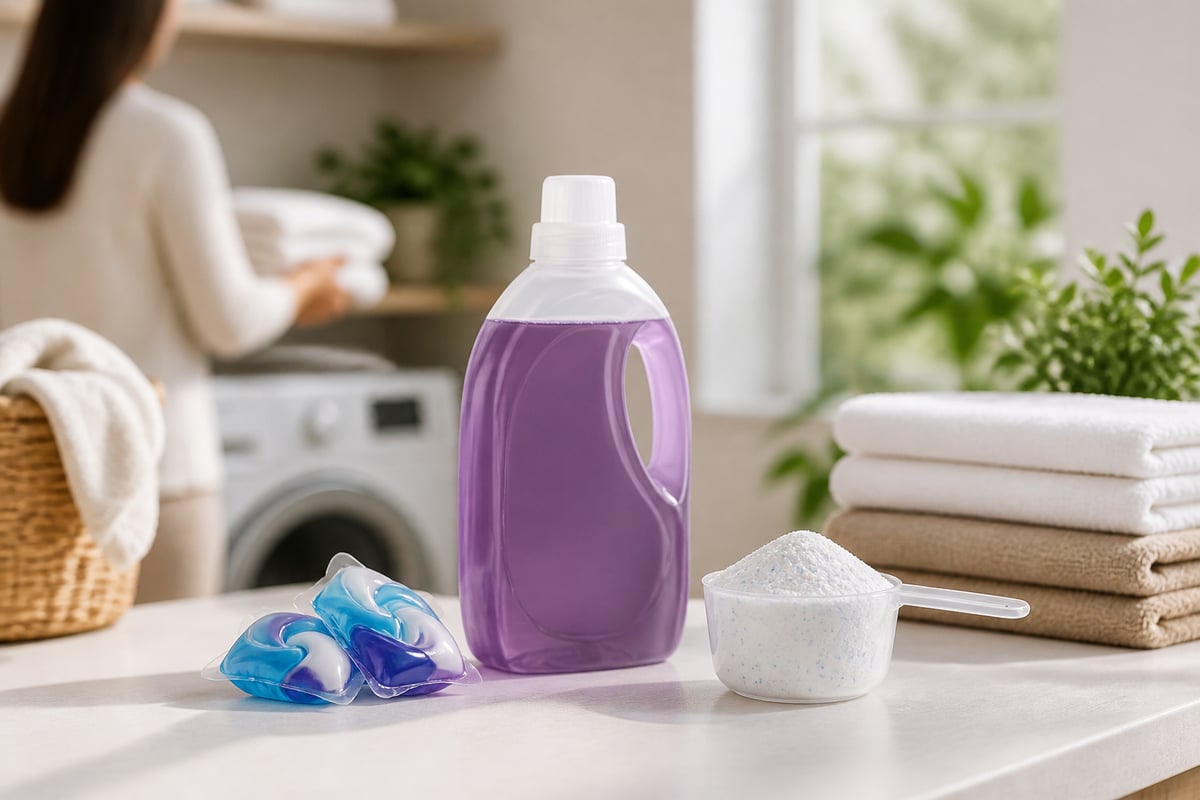
Pods win on convenience and dosing accuracy, liquid wins on flexibility, and powder wins on cost per load in some cases. Each format has a place, and the right choice depends on volume, storage and the kind of laundry you wash.
| Format | Dosing | Mess | Pre-treating stains | Typical strength |
|---|---|---|---|---|
| Pods | Pre-measured | Minimal | Not possible on the fabric directly | Concentrated, fixed dose |
| Liquid | Adjustable | Drips and spills | Easy | Flexible per load |
| Powder | Adjustable | Dust, clumping | Limited | Strong on heavy soil |
Pods remove guesswork, which is the main reason households and high-volume operators adopt them. Liquid is easier to use as a spot treatment, and powder can handle certain heavy-soil jobs. If you want a closer look at the cleaning performance trade-off, the Laundry Labs comparison of powder detergent vs. capsules goes through it in detail.
Which Washing Pods Contain Fabric Softener?
Only multi-benefit or "all-in-one" pods contain a softening component, and the label will say so. A basic detergent pod cleans but does not soften. If the packaging lists softening, conditioning or "3-in-1" or "5-in-1" benefits, a softening agent is built in.
Check the front panel and ingredient list for these cues:
- "Softens" or "fabric care" claims on the front
- Cationic or non-ionic softening agents in the ingredient list
- Multi-chamber construction visible through the film
Laundry Labs pods use a non-ionic softener that works throughout the wash cycle, and the pods are described as combining cleaning, brightening, softening, freshening and odor fighting in one dose. Our PowerPax™ 5-in-1 Linen Fresh Laundry Pods, 36 count are built on that formula, so a household can skip the separate softener step entirely.
Are Laundry Pods Safe? What to Know About Storage and Handling
Laundry pods are safe to use as directed but must be stored out of reach of children and pets, because they are highly concentrated. Consumer Reports cites 117,808 calls to U.S. Poison Centers related to liquid laundry packet exposure between 2013 and February 2024, and notes that the CPSC reported eight U.S. deaths related to ingesting liquid laundry detergent packets between 2012 and early 2017.
Poison Control adds that pod ingestion is associated with more stomach irritation and a higher incidence of breathing problems and drowsiness than ingestion of liquid laundry detergent. These risks are one reason storage and child-resistant packaging matter.
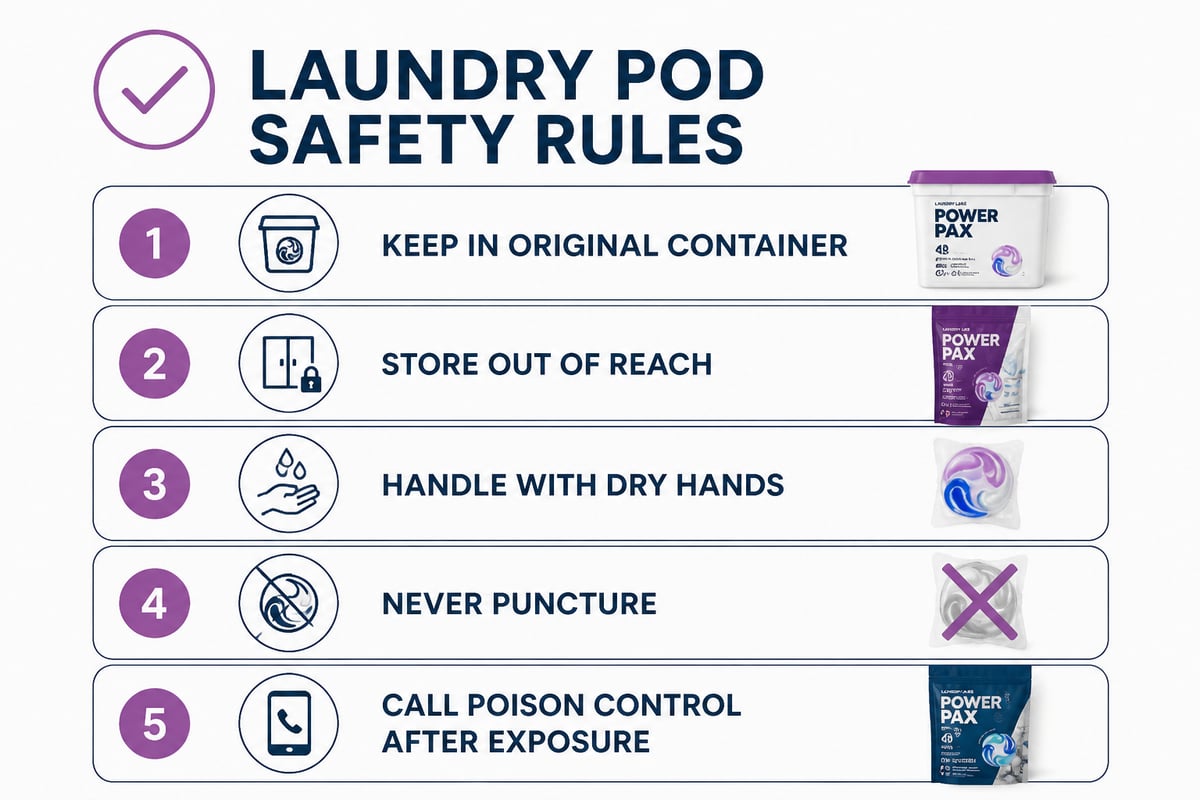
Practical handling rules:
- Keep pods in their original, tightly closed container
- Store them high up or behind a latch, away from children and pets
- Handle them with dry hands, since moisture begins to dissolve the film
- Never puncture, cut or microwave a pod
- Wipe up any spilled film residue promptly
If someone swallows a pod or gets detergent in their eyes, contact Poison Control immediately.
Why Laundromat Operators Choose Pods
Pods reduce product cost variance because every cycle uses an identical dose, which keeps results consistent from one customer load to the next. For operators who dispense or sell detergent, that predictability supports tighter margins and fewer complaints about under-cleaned or over-sudsed loads.
Laundry Labs reports that its ultra-concentrated pods are designed for commercial-grade cleaning and work in standard, high-efficiency and industrial washers. The brand is trusted by 1,200+ laundromats nationwide and has over 280 customer reviews. For operators exploring recurring supply, the article on why laundromats love subscription laundry pods covers the ordering side.
A few operational benefits stand out:
- Consistent dosing removes dispenser calibration issues
- Less spillage keeps floors and machines cleaner
- One-step vending is simpler for attendants and customers
- Fewer separate products means less stock to manage
Operators who also care about their brand positioning may find the guide on how small laundromats can compete with corporate chains useful. For stocking decisions, the full Laundry Labs product collection is the place to compare options.
Are Laundry Pods Environmentally Friendly?
It depends on the formula and the film. The pod format itself reduces packaging waste and overdosing, but the film and the ingredient list determine the real footprint. Look for formulas that use biodegradable ingredients and fewer harsh chemicals, and check the manufacturer's claims about how the film breaks down in wastewater.
Laundry Labs describes its eco-friendly laundry solutions as designed for sustainability, and check the product details for ingredient information. To weigh claims across brands, the Laundry Labs list of environmentally friendly detergent picks for 2026 gives a framework for what to look for on labels.
How to Choose the Right Pod for Your Laundry
Choose a pod by matching three things: your washer type, your fabric and skin needs, and the number of cleaning jobs you want one dose to handle. A high-efficiency machine needs an HE-compatible formula, sensitive skin points toward free-and-clear options, and a busy household or laundromat benefits most from a multi-benefit pod.
Use this short decision path:
- Check machine compatibility. Confirm the pod works in standard, HE or industrial washers.
- Decide on scent. Free-and-clear formulas suit sensitive skin; scented ones add freshness.
- Look for built-in softening. If you want to drop a separate softener, pick an all-in-one.
- Compare cost per load. Divide the package price by the pod count, and note subscription savings.
- Review the ingredient and film information. Prefer clear disclosure on biodegradability.
One note on policy: Laundry Labs sales are final except for damaged or incorrect items, so this brand is not the right fit if you expect returns or refunds on opened products.
FAQ
Is Seventh Generation detergent effective?
For heavy soil or high-volume use, compare concentration and dose per load across pods before committing to a large order.
Do laundry pods work in cold water?
Yes, if the formula is designed for it. Tide states that its pods are designed for any machine and water temperature, including cold water. Check the label for a cold-water claim, and pick a cold-friendly cycle for delicate fabrics.
Can you use a pod in a small load?
Usually yes. A single pod is generally fine for a small load, though some brands allow cutting dose in half only if the pod is designed for it. Never cut or puncture a pod yourself, and follow the label.
Check the label on whatever pod you use now and confirm it matches your washer type and your usual load size. If you want one dose that cleans, softens and freshens without extra products, try the PowerPax™ 5-in-1 Linen Fresh Laundry Pods. Laundry Labs builds eco-friendly, commercial-grade capsules for homes and laundromats, so you can shop PowerPax and put an efficient, mess-free cycle on repeat.