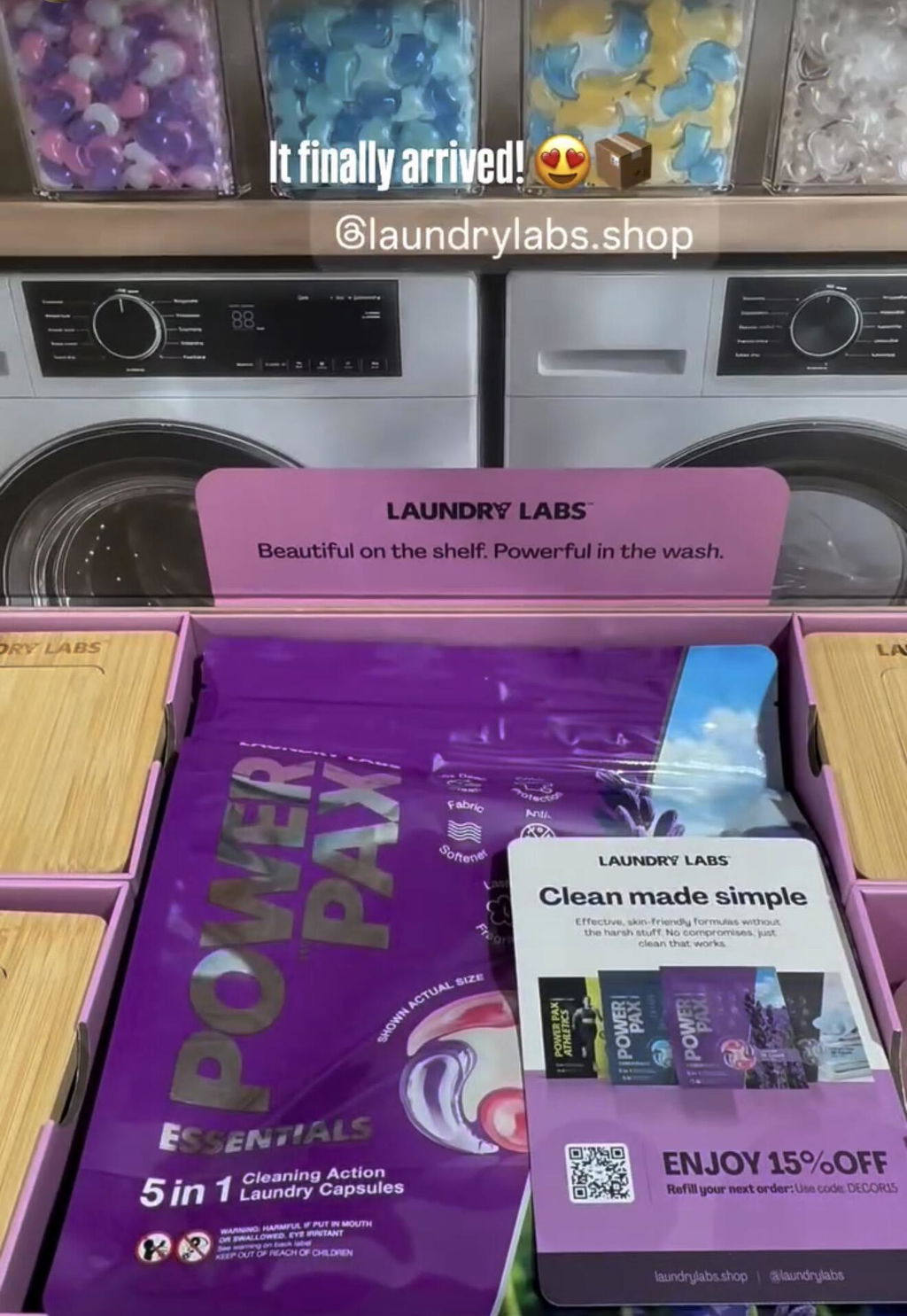
Laundry Soap Fragrance Free: Benefits & Buying Guide

The shift toward laundry soap fragrance free options represents more than a passing trend. For millions of Americans managing sensitive skin, allergies, or respiratory conditions, removing synthetic fragrances from their laundry routine has become a health necessity. These products eliminate the complex chemical mixtures used to create scents while maintaining the cleaning power essential for effective fabric care. As awareness grows about the potential health impacts of fragrance chemicals in enclosed spaces, both residential and commercial settings are reconsidering their detergent choices.
Understanding Fragrance-Free Versus Unscented Products
The terminology surrounding laundry soap fragrance free options can confuse even informed consumers. A truly fragrance-free product contains zero fragrance ingredients, whether synthetic or natural. In contrast, unscented products may actually contain masking fragrances designed to neutralize the natural odors of cleaning ingredients. This distinction matters significantly for individuals with chemical sensitivities or those following medical guidance to avoid fragrance exposure.
According to the EPA Safer Choice Criteria for Fragrances, fragrance mixtures can contain dozens of individual chemicals, many of which manufacturers are not required to disclose on product labels. When selecting laundry soap fragrance free formulations, consumers avoid this entire category of undisclosed ingredients. The regulatory framework continues to evolve, with the EPA Safer Choice program recently updating its standards to provide clearer guidance on fragrance-free labeling and certification.
The Chemical Complexity of Synthetic Fragrances
Fragrance formulations in conventional detergents typically contain 50 to 300 different chemical compounds. These complex mixtures serve multiple purposes beyond simply making clothes smell pleasant. They mask the inherent odors of surfactants and enzymes, provide a sensory experience associated with cleanliness, and create brand differentiation in a crowded marketplace.
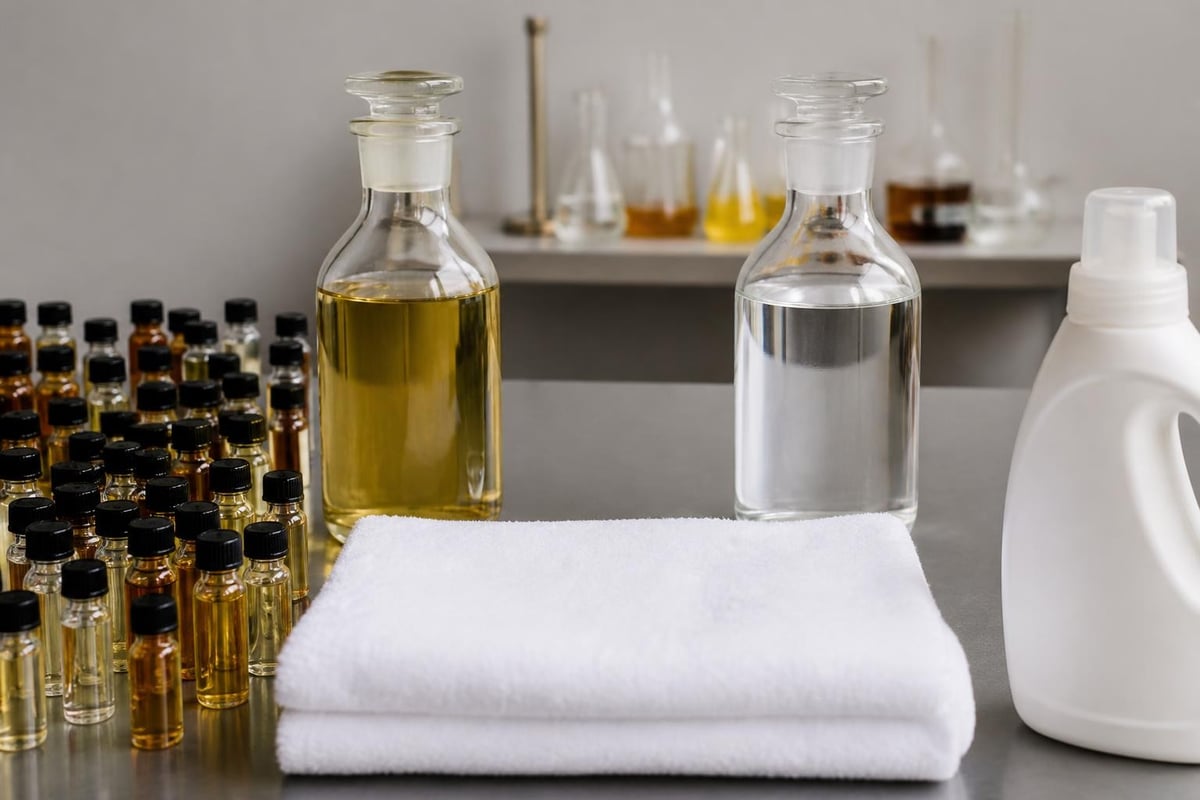
Research published in Environmental Health perspectives has examined the indoor air quality implications of fragranced consumer products, including laundry detergents. The studies indicate that volatile organic compounds (VOCs) released from fragranced products can persist in indoor environments and may contribute to various health concerns. This research provides scientific context for why many healthcare providers now recommend laundry soap fragrance free options to their patients.
Health Benefits for Sensitive Populations
Multiple medical organizations now provide specific guidance about fragrance-free laundry products for vulnerable populations. The American Academy of Dermatology recommends fragrance-free and dye-free detergents for individuals with eczema and sensitive skin conditions. This clinical guidance reflects decades of dermatological research linking fragrance exposure to contact dermatitis, skin irritation, and the exacerbation of existing skin conditions.
Respiratory and Allergy Considerations
For individuals with asthma and allergic conditions, the benefits of laundry soap fragrance free extend beyond skin contact. The Asthma and Allergy Foundation of America includes fragrance-free laundry products in its certified asthma and allergy-friendly product guidance. Fragrances can act as respiratory irritants, triggering symptoms in sensitive individuals even when the scented garments are simply worn or stored in closets.
International certification bodies have also recognized this connection. The European Centre for Allergy Research Foundation recently announced a new certification category specifically for detergents that meet stringent allergy-friendly criteria, with fragrance restrictions playing a central role in the assessment process.
Key health benefits include:
- Reduced contact dermatitis and skin irritation
- Decreased respiratory triggers for asthma and allergies
- Lower exposure to potentially sensitizing chemicals
- Better outcomes for chemically sensitive individuals
- Safer environment for infants and young children
Environmental and Sustainability Advantages
The environmental profile of laundry soap fragrance free products extends beyond the absence of fragrance compounds themselves. Many fragrance-free formulations align with broader eco-friendly initiatives, reducing the overall chemical load released into water systems during the wash and rinse cycles. Green Seal's GS-48 Laundry Care Standard establishes comprehensive environmental and health criteria for certified products, including specific provisions addressing fragrances and ingredient transparency.
When manufacturers eliminate fragrance ingredients, they often simplify their overall formulations. This streamlining typically results in products with fewer total chemical ingredients, reduced packaging complexity, and manufacturing processes that generate less waste. The Green Seal certification program evaluates these factors holistically, recognizing that fragrance-free formulations frequently demonstrate better overall environmental performance.
| Environmental Factor | Fragrance-Free Advantage | Conventional Products |
|---|---|---|
| Total ingredient count | Lower (simplified formulations) | Higher (complex fragrance blends) |
| Aquatic toxicity | Reduced chemical load | Additional fragrance compounds |
| Indoor air quality | Minimal VOC emissions | Elevated VOC levels |
| Biodegradability | Typically faster | Varies with fragrance type |
| Allergen potential | Significantly lower | Higher sensitization risk |
Selecting the Right Fragrance-Free Product
Not all laundry soap fragrance free options deliver equivalent cleaning performance or meet the same standards. Consumers and commercial operators should evaluate several factors when selecting products that balance efficacy, safety, and value. Consumer Reports' laundry detergent buying guide provides independent testing data showing that many fragrance-free formulations match or exceed the cleaning power of their scented counterparts.
Certification and Third-Party Verification
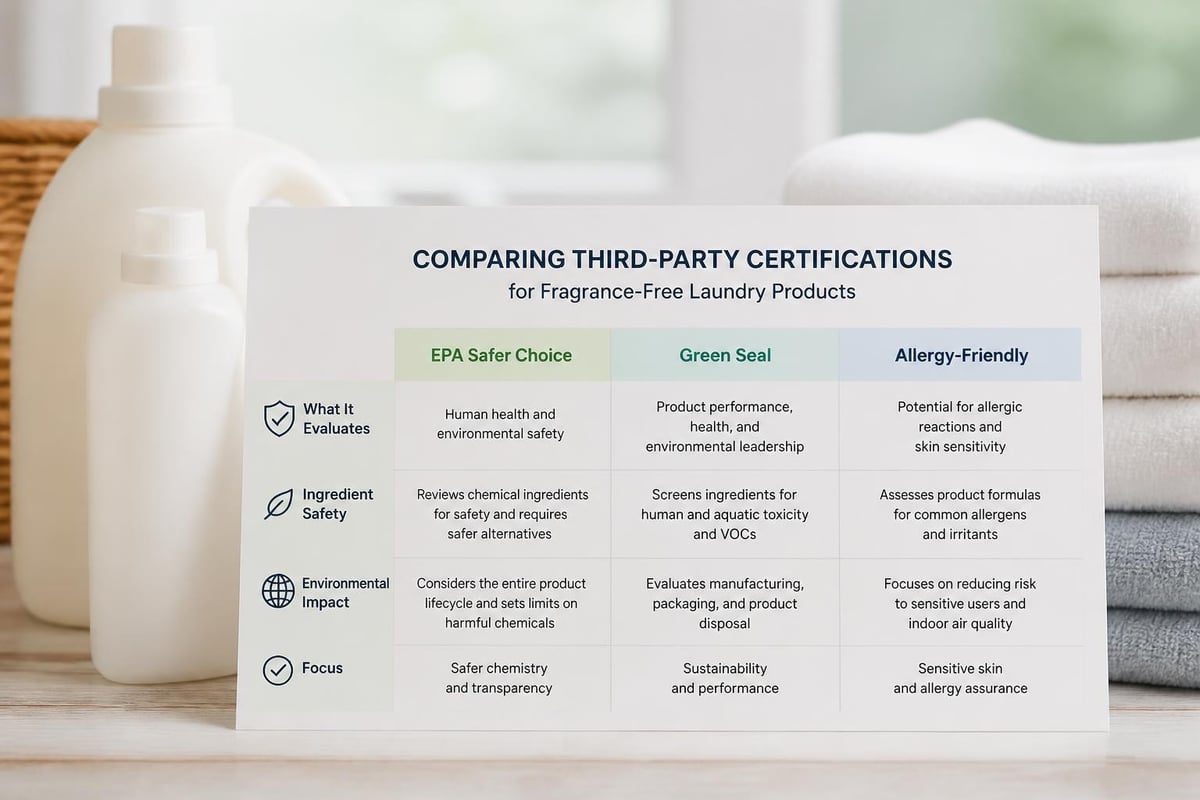
Third-party certifications provide assurance that products meet defined standards for both performance and ingredient safety. Look for recognized seals such as EPA Safer Choice, Green Seal, or asthma and allergy-friendly certification. These programs require manufacturers to submit detailed ingredient information and often conduct independent testing to verify claims.
Important certification considerations:
- EPA Safer Choice: Verifies that every ingredient meets strict safety criteria
- Green Seal: Evaluates environmental impact across the product lifecycle
- Asthma & Allergy Friendly: Tests products for reduced allergen and irritant potential
- ECARF Seal: European standard for allergy-tested consumer products
- Dermatologist Tested: Clinical evaluation for skin compatibility
Commercial-Grade Fragrance-Free Solutions
Commercial settings face unique challenges when implementing laundry soap fragrance free programs. Multi-family housing, hospitality operations, healthcare facilities, and athletic facilities must balance the diverse sensitivities of their populations while maintaining cleaning standards and controlling costs. The 5-in-1 Free & Clear collection demonstrates how modern fragrance-free formulations can integrate multiple functions-detergent, softener, stain treatment, odor control, and brightening-into single-dose capsules designed for commercial efficiency.
For operations requiring both scented and unscented options, strategic product selection allows facilities to accommodate preferences while prioritizing health and safety. Many commercial launderers now designate specific machines for fragrance-free products to prevent cross-contamination and ensure that sensitive individuals receive genuinely fragrance-free results.
Performance Expectations and Common Misconceptions
A persistent myth suggests that laundry soap fragrance free options clean less effectively than fragranced alternatives. This misconception stems from psychological associations between scent and cleanliness deeply embedded in consumer expectations. In reality, fragrance compounds contribute nothing to cleaning performance. The active ingredients responsible for soil removal, stain treatment, and fabric care function identically whether fragrance is present or absent.
Cleaning Mechanism Fundamentals
Effective laundry cleaning depends on four key components working together: surfactants to lift soils, enzymes to break down specific stains, builders to soften water and enhance surfactant performance, and mechanical action from the washing process. None of these fundamental cleaning mechanisms require or benefit from fragrance additives.
| Cleaning Component | Function | Fragrance Impact |
|---|---|---|
| Surfactants | Lift and suspend soils | None |
| Enzymes | Break down proteins, starches, fats | None |
| Builders | Soften water, boost cleaning | None |
| Bleaching agents | Remove stains, brighten whites | None |
| Mechanical action | Physical agitation and rinsing | None |
The perception that fragrance-free laundry soap doesn't work stems from the absence of scent cues rather than actual performance deficits. Independent testing consistently demonstrates that well-formulated fragrance-free products achieve cleaning results equivalent to or better than scented versions. This makes them particularly suitable for commercial applications where objective cleanliness standards must be met regardless of subjective sensory experiences.
Transitioning to Fragrance-Free Laundry Routines
Switching to laundry soap fragrance free requires some adjustment, particularly for households accustomed to the scent associations of conventional products. The transition period allows users to recalibrate their expectations and develop new ways of assessing cleanliness without relying on fragrance cues.
Practical transition steps:
- Start with less critical items like towels and linens
- Wash fragrance-free loads separately initially to prevent scent transfer
- Clean washing machine drums between fragrance types
- Educate household members about the health and environmental benefits
- Be patient as residual fragrances dissipate from previously washed items
Addressing Residual Odors Without Fragrance
One legitimate concern about fragrance-free products involves managing genuine odors from soiled garments and linens. Athletic wear, pet bedding, and heavily soiled work clothes present odor challenges that many assume require fragranced products. However, modern commercial-grade formulations incorporate odor-neutralizing technologies that eliminate malodors at the molecular level rather than simply masking them with fragrance.
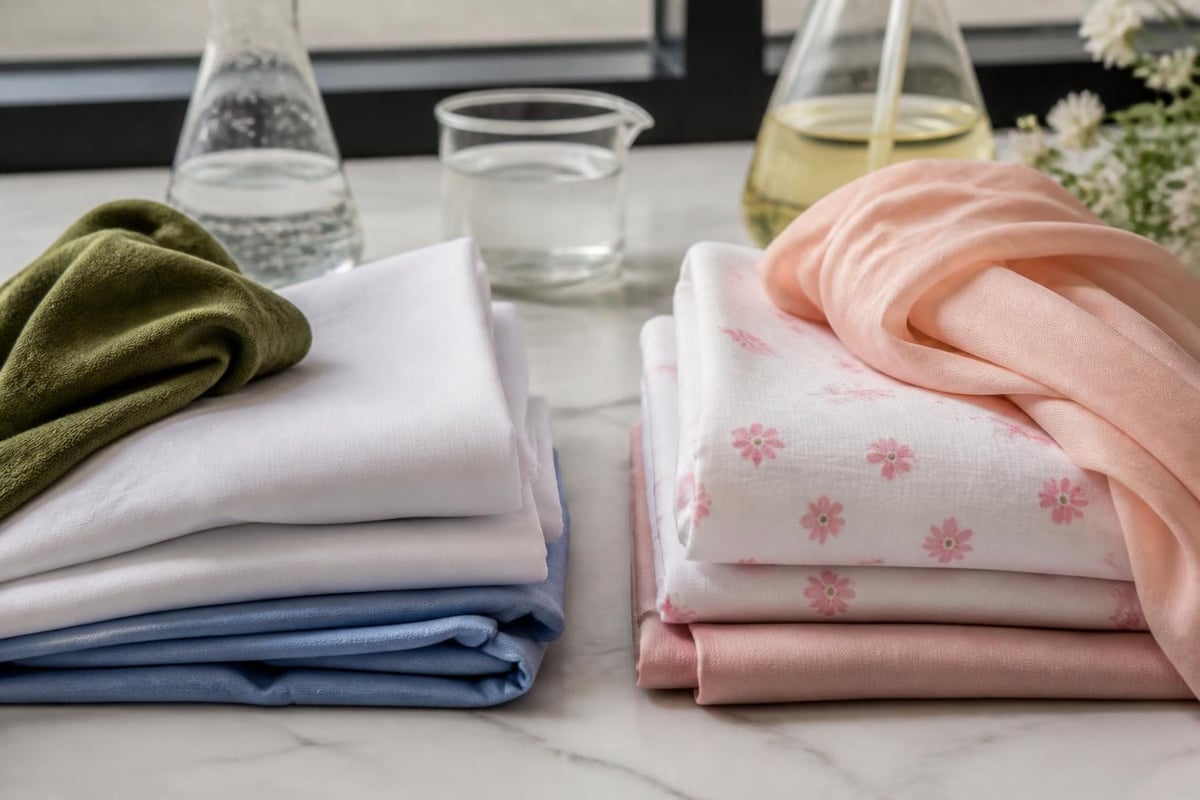
Enzyme-based odor control targets the organic compounds responsible for unpleasant smells, breaking them down into odorless molecules. This approach proves more effective than fragrance masking, particularly for persistent odors from sweat, bacteria, and organic soils. For specialized applications like athletic wear, dedicated performance formulations deliver enhanced odor control while maintaining fragrance-free status.
Special Considerations for Different Fabric Types
Laundry soap fragrance free works effectively across diverse fabric types, but understanding specific considerations optimizes results. Technical fabrics used in athletic wear and outdoor gear particularly benefit from fragrance-free formulations, as fragrance residues can interfere with moisture-wicking properties and breathability features engineered into these specialized textiles.
Delicate and Natural Fibers
Natural fibers including wool, silk, and linen respond well to fragrance-free laundry products. These materials can be sensitive to the chemical complexity of fragrance mixtures, which may cause discoloration, degradation, or texture changes over time. Fragrance-free formulations reduce these risks while providing gentle but effective cleaning.
Fabric-specific benefits:
- Technical athletic fabrics: Preserved moisture-wicking and breathability
- Wool and cashmere: Reduced risk of fiber damage and color fade
- Silk: Gentle cleaning without chemical complexity
- Microfiber: Maintained absorbency and cleaning performance
- Cotton and linen: Clean results without residue buildup
Commercial operations managing diverse textile inventories increasingly standardize on laundry soap fragrance free to protect fabric investments and ensure consistent results across different material types. This approach simplifies inventory management while addressing the sensitivities of staff and customers who interact with the laundered items.
Cost Analysis and Value Proposition
The perception that laundry soap fragrance free costs more than conventional products deserves examination. While premium fragrance-free products may carry higher per-unit prices, total cost analysis often reveals competitive or superior value. Concentrated formulations, multi-function designs, and elimination of unnecessary ingredients frequently result in lower cost per load than appears from shelf prices alone.
| Cost Factor | Fragrance-Free Advantage | Long-Term Impact |
|---|---|---|
| Concentration levels | Often higher (fewer fillers) | Fewer products needed |
| Multi-function design | Eliminates separate products | Reduced inventory costs |
| Health expenses | Reduced skin/respiratory issues | Lower medical costs |
| Fabric longevity | Gentler on fibers | Extended textile life |
| Water/energy usage | Efficient rinsing | Lower utility bills |
Commercial operations see additional value through reduced complaints, improved occupant satisfaction, and decreased liability exposure related to fragrance sensitivities. Healthcare facilities, schools, and multi-family housing increasingly recognize these hidden costs of fragranced products, making the value proposition of laundry soap fragrance free even more compelling in institutional settings.
Implementation Strategies for Commercial Settings
Facilities transitioning to laundry soap fragrance free face operational considerations beyond simple product substitution. Successful implementation requires communication, training, and systematic approaches to ensure consistent results and stakeholder buy-in. The Laundry Labs blog provides ongoing resources for commercial operators navigating these transitions.
Staff Training and Communication
Frontline staff who handle laundry operations need clear guidance about fragrance-free products, including proper dosing, optimal water temperatures, and load composition. Many workers have developed practices based on fragrance cues (such as adding extra detergent until they smell it), which must be replaced with objective measures like following dosage instructions and evaluating visible cleanliness.
Communication extends to end users as well. Residents, guests, or patients experiencing fragrance-free laundry for the first time may have questions or concerns. Proactive education about the health and environmental benefits, supported by clear signage and responsive customer service, smooths the transition and builds support for the policy change.
Implementation best practices:
- Pilot fragrance-free products in limited areas first
- Collect feedback from staff and users during trials
- Document cleaning results and any adjustments needed
- Train all relevant personnel on new products and procedures
- Maintain clear labeling and separation of fragrance-free inventory
- Establish protocols for handling requests for scented alternatives
Regulatory Trends and Future Outlook
The regulatory landscape for laundry soap fragrance free continues to evolve as awareness of fragrance-related health concerns grows. Multiple states have introduced or considered legislation requiring greater transparency in fragrance ingredient disclosure. While comprehensive federal regulation remains limited, programs like EPA Safer Choice provide voluntary frameworks that many manufacturers and institutional purchasers now reference in procurement decisions.
International developments also influence the domestic market. European regulations on allergenic fragrances and chemical safety standards often exceed U.S. requirements, pushing multinational manufacturers to reformulate products or develop fragrance-free alternatives that meet more stringent criteria. These global trends accelerate the availability and improvement of fragrance-free options in the American market.
The growth trajectory for laundry soap fragrance free products shows no signs of slowing. Market research indicates increasing consumer demand driven by health awareness, environmental concerns, and the aging population's higher incidence of chemical sensitivities. Manufacturers including Laundry Labs continue investing in innovative fragrance-free formulations that deliver commercial-grade performance while meeting evolving safety and sustainability standards.
Choosing laundry soap fragrance free delivers measurable health, environmental, and performance benefits for both residential and commercial applications. Understanding the distinctions between truly fragrance-free products and marketing claims, evaluating certifications, and selecting formulations matched to specific needs ensures optimal results. Laundry Labs creates powerful, eco-friendly solutions including advanced fragrance-free capsule formulations that combine detergent, softener, stain treatment, and odor control in commercial-grade products designed for efficiency and sustainability.