Liquid Detergent: The Complete Guide for 2026

The laundry industry has undergone remarkable transformations over the past decades, with liquid detergent emerging as one of the most significant innovations in fabric care. Unlike traditional powder formulas, liquid detergent offers unique advantages in cleaning performance, convenience, and formulation flexibility. As we move through 2026, understanding the science, benefits, and environmental considerations of liquid detergents has become increasingly important for both commercial operations and environmentally conscious consumers. This comprehensive guide explores everything you need to know about liquid detergents, from their chemical composition to their role in sustainable laundry practices.
Understanding Liquid Detergent Formulations
Liquid detergent represents a sophisticated blend of surfactants, enzymes, builders, and other active ingredients suspended in a stable aqueous solution. The formulation science behind these products has advanced significantly, with researchers continuously refining compositions to maximize cleaning power while minimizing environmental impact.
Core Components and Their Functions
Modern liquid detergent formulations typically contain several key ingredient categories working in synergy. Surfactants serve as the primary cleaning agents, reducing surface tension between water and soil particles to lift dirt from fabric fibers. Anionic surfactants like linear alkylbenzene sulfonates provide excellent cleaning power, while nonionic surfactants enhance performance in cold water and hard water conditions.
Enzymes play a critical role in breaking down specific stain types:
- Proteases target protein-based stains like blood and grass
- Amylases break down starch-based residues
- Lipases tackle oil and grease stains
- Cellulases help maintain fabric appearance by removing microfibrils
Builders and chelating agents soften water by binding to mineral ions, allowing surfactants to work more effectively. Research exploring liquid laundry detergent formulations has demonstrated how advanced formulation strategies enhance both performance and sustainability over the past decade.

Performance Advantages Over Alternative Formats
Liquid detergent offers distinct performance benefits that have driven its widespread adoption across residential and commercial laundry operations. Understanding these advantages helps operators make informed decisions about their cleaning protocols.
Dissolution and Dispersion Characteristics
One primary advantage of liquid detergent lies in its immediate availability for cleaning action. Unlike powder formulations that require dissolution time, liquid products disperse instantly throughout the wash water. This characteristic proves particularly valuable in cold water washing, where powder detergents may struggle to dissolve completely.
Temperature flexibility represents another significant benefit. Liquid detergents perform consistently across temperature ranges, from cold to hot water cycles. Studies evaluating detergent effectiveness have shown that properly formulated liquid detergents maintain cleaning performance even in soft water conditions at varying temperatures.
| Performance Factor | Liquid Detergent | Powder Detergent |
|---|---|---|
| Cold Water Dissolution | Excellent | Moderate to Poor |
| Dosing Precision | High | Moderate |
| Residue on Fabrics | Minimal | Possible in Hard Water |
| Pre-treatment Capability | Excellent | Not Applicable |
| Storage Stability | Good (if sealed) | Excellent |
The versatility of liquid formulations also enables direct fabric application for pre-treating stubborn stains, a capability that powder formats cannot match. This dual functionality streamlines the laundry process while improving stain removal outcomes.
Environmental Considerations and Sustainability
The environmental profile of liquid detergent has become increasingly important as consumers and businesses prioritize sustainability. Modern formulations must balance cleaning performance with ecological responsibility, addressing concerns about water consumption, packaging waste, and chemical impact.
Life Cycle Environmental Impact
Comprehensive life cycle studies have assessed the environmental footprint of various detergent categories across Europe, providing valuable insights into sustainability profiles. These analyses consider raw material extraction, manufacturing processes, transportation, consumer use, and end-of-life disposal.
Concentrated liquid detergent formulations significantly reduce packaging waste and transportation emissions per wash load. By removing excess water from formulations, manufacturers can deliver the same number of wash cycles in smaller, lighter packages. This concentration trend aligns with broader sustainability goals while reducing logistics costs.
Water efficiency represents another critical consideration. While liquid detergents contain water as a carrier, concentrated formulas minimize this component. The shift toward ultra-concentrated products reflects the industry's commitment to resource conservation. For those interested in eco-friendly laundry solutions, understanding concentration ratios helps maximize environmental benefits.
Biodegradability and Aquatic Safety
Modern liquid detergent formulations increasingly emphasize biodegradable ingredients that break down safely in wastewater treatment systems. Manufacturers have largely phased out phosphates due to their eutrophication effects, replacing them with more environmentally friendly builders like citrates and polycarboxylates.
Surfactant selection also reflects environmental priorities. Linear alkylbenzene sulfonates and alcohol ethoxylates, common in contemporary formulations, demonstrate good biodegradability profiles. Third-party certifications help consumers and businesses identify products meeting rigorous environmental standards.
Commercial Applications and Efficiency
Commercial laundry operations demand consistent performance, cost efficiency, and operational simplicity. Liquid detergent formulations designed for commercial use must meet these stringent requirements while maintaining fabric care standards.
Dosing Accuracy and Cost Control
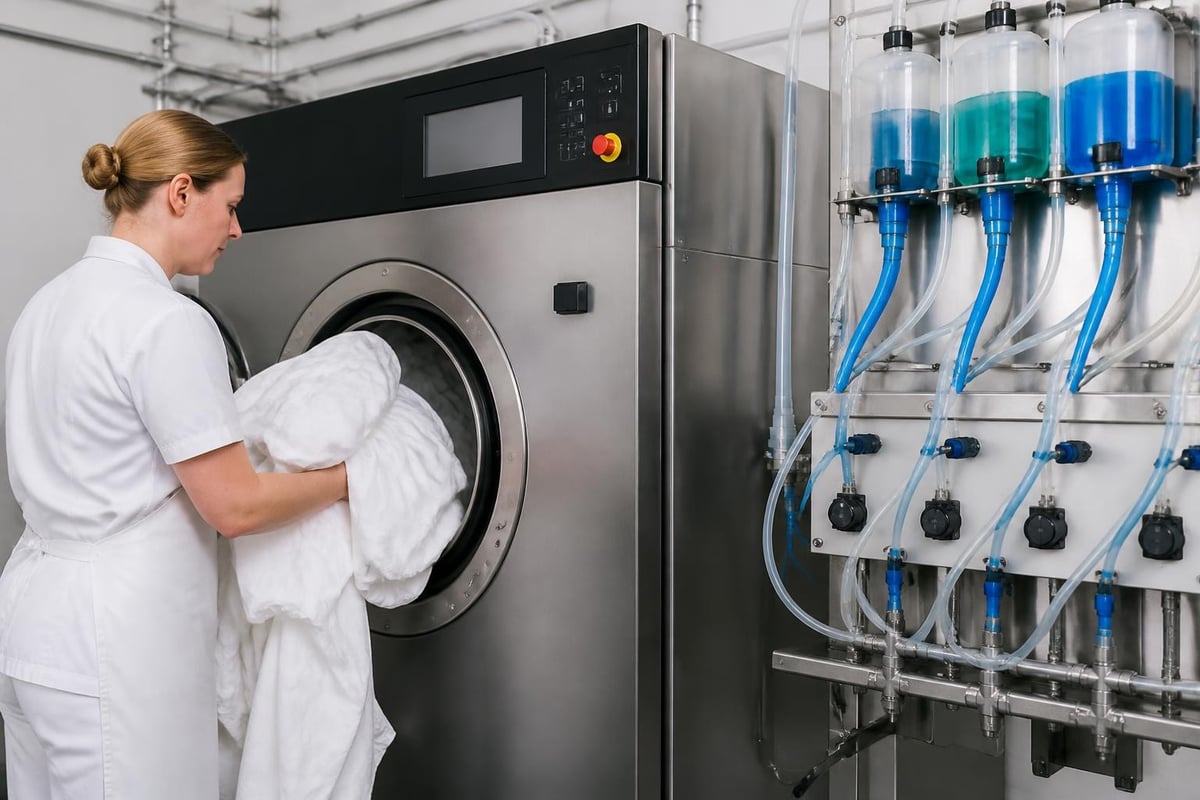
Precise dosing represents a critical factor in commercial laundry economics. Automated dispensing systems work seamlessly with liquid detergent, measuring exact quantities based on load size, soil level, and water hardness. This precision prevents product waste while ensuring optimal cleaning results.
Cost per load analysis reveals important considerations:
- Calculate the concentration level of the liquid detergent
- Determine the recommended dose per kilogram of laundry
- Factor in water temperature and hardness adjustments
- Account for pre-treatment requirements for heavily soiled items
- Compare total cost against cleaning performance outcomes
Research on liquid detergent composition standards provides valuable benchmarks for evaluating commercial product performance against industry standards.
Integration with Modern Washing Equipment
Contemporary commercial washing machines feature sophisticated controls that optimize detergent performance. These systems adjust water levels, temperature, and agitation based on the detergent type and formulation characteristics. Liquid detergents integrate smoothly with these technologies, enabling programmed wash cycles that maximize efficiency.
High-efficiency (HE) washers particularly benefit from liquid formulations designed to produce minimal suds. Low-sudsing formulas prevent over-sudsing that can reduce mechanical action and extend cycle times. Commercial operators using HE equipment should verify that their liquid detergent carries appropriate HE compatibility labeling.
Innovation in Liquid Detergent Technology
The liquid detergent category continues evolving through scientific advancement and consumer demand for enhanced performance. Recent innovations address multiple aspects of the laundry process, from cleaning power to user experience.
Multi-Functional Formulations
Traditional liquid detergent focused primarily on cleaning, but modern formulations integrate additional benefits into single products. These all-in-one solutions combine detergent with fabric softeners, stain removers, odor eliminators, and color protectors. This consolidation reduces the number of products required while simplifying the laundry process.
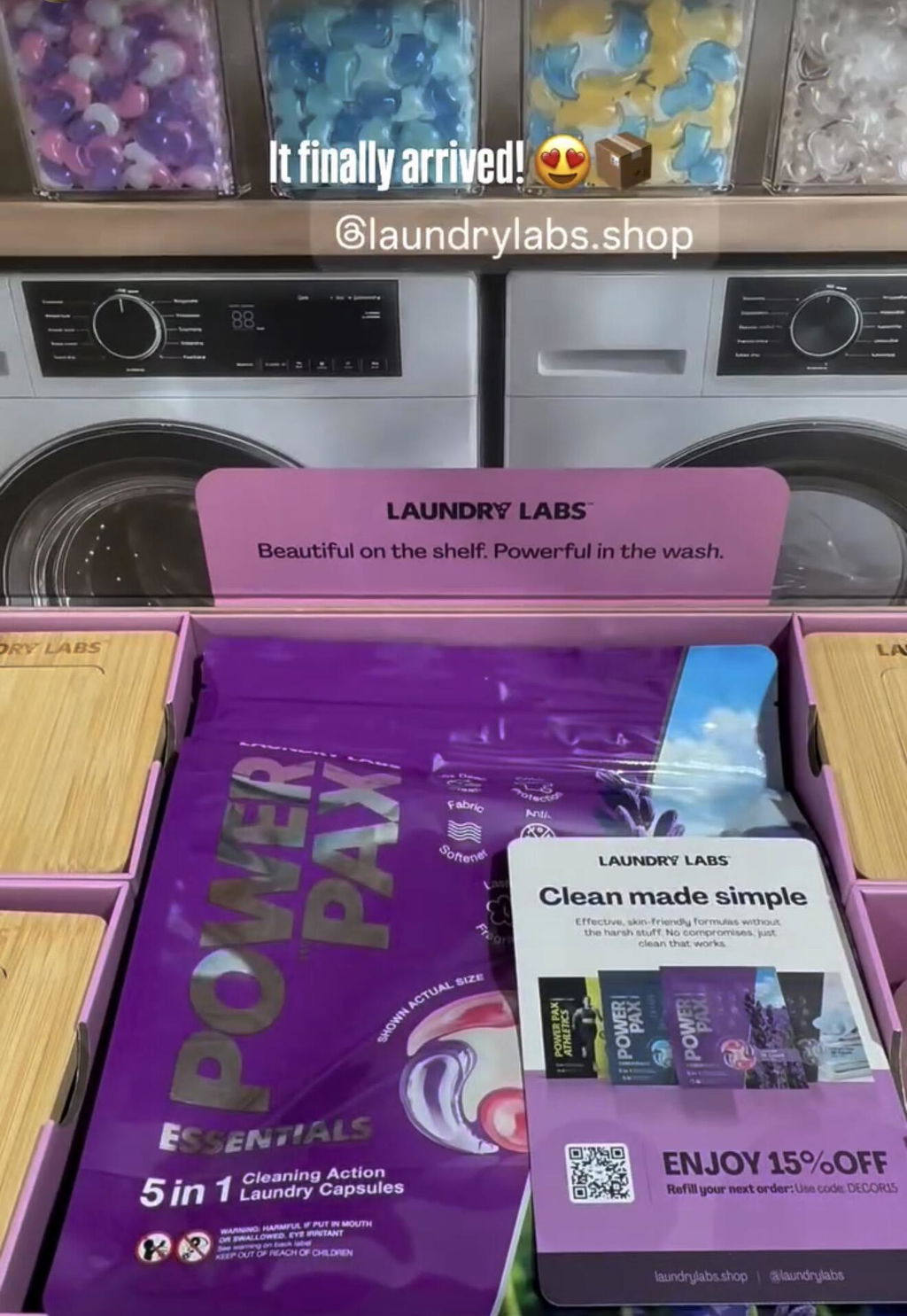
The comparison between powder detergent and capsule formats highlights how innovation continues reshaping traditional liquid detergent paradigms. Capsule technology represents an evolution of liquid detergents, pre-measuring doses in dissolvable films for ultimate convenience.
Advanced Manufacturing Techniques
Recent advancements in industrial liquid mixing technologies have revolutionized detergent production. Improved mixing equipment ensures homogeneous dispersions of active ingredients, preventing separation and maintaining product stability throughout shelf life.
Modern manufacturing facilities employ:
- Continuous mixing systems for consistent batch quality
- Temperature-controlled processing to protect sensitive enzymes
- In-line quality monitoring to verify specification compliance
- Aseptic filling for products free from preservative requirements
These technological improvements enable manufacturers to create more sophisticated formulations with enhanced performance characteristics while maintaining cost efficiency.
Selecting the Right Liquid Detergent for Your Needs
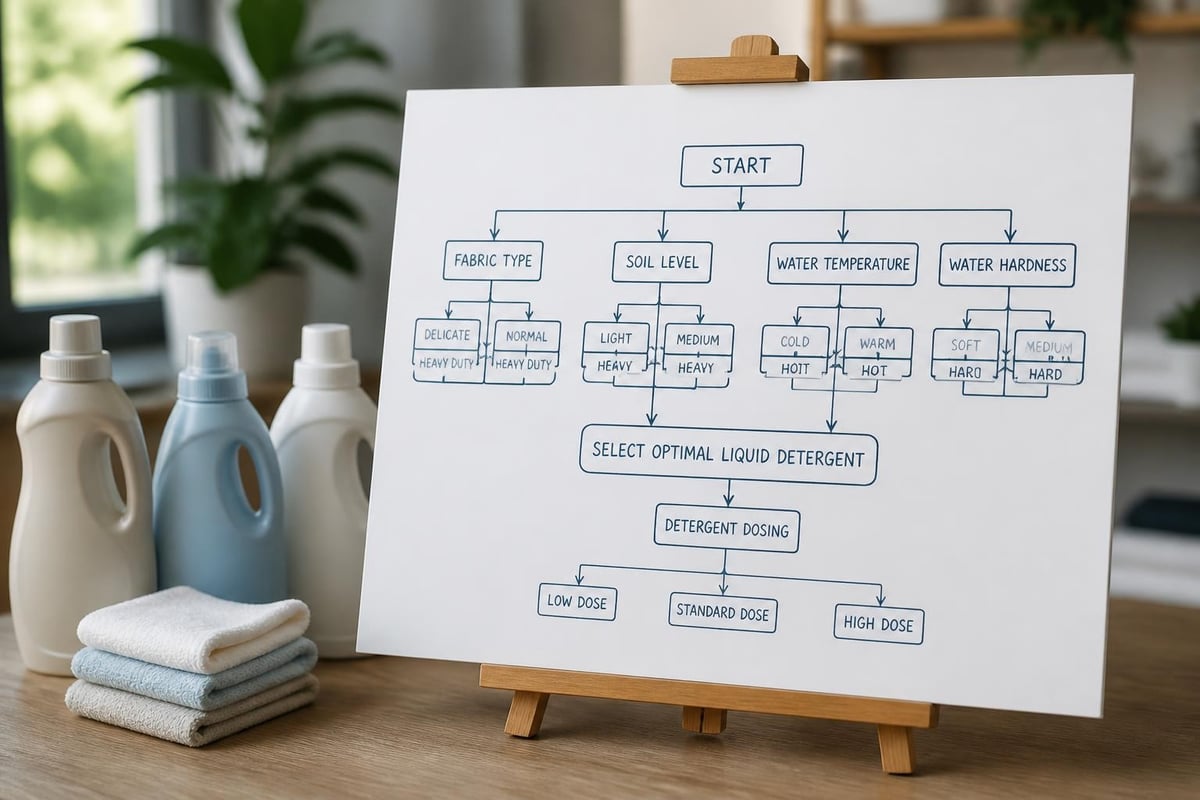
Choosing an appropriate liquid detergent requires evaluating multiple factors related to fabric types, soil conditions, water quality, and operational requirements. This decision significantly impacts cleaning outcomes and overall satisfaction.
Water Hardness Compatibility
Water hardness profoundly affects detergent performance. Hard water contains elevated levels of calcium and magnesium ions that interfere with surfactant activity. Liquid detergents formulated for hard water include additional chelating agents or builders to sequester these minerals.
Testing your water hardness helps determine appropriate product selection. Many municipalities provide water quality reports, or you can use simple test strips. Studies analyzing detergent performance across different water hardness levels demonstrate the importance of matching formulations to local water conditions.
| Water Hardness Level | Grains per Gallon | Detergent Considerations |
|---|---|---|
| Soft | 0-3 | Standard formulations work well |
| Moderate | 3-7 | May need slight dose increase |
| Hard | 7-10 | Requires enhanced builders |
| Very Hard | 10+ | Specialized hard water formula recommended |
Fabric Care Requirements
Different fabric types demand specific care approaches. Delicate materials like silk, wool, and synthetic athletic wear benefit from liquid detergents with neutral pH levels and mild surfactants. Conversely, heavily soiled work uniforms or industrial textiles may require alkaline formulations with aggressive cleaning agents.
Specialized formulations address specific fabric care challenges. For athletic wear and performance fabrics, dedicated products remove odor-causing bacteria and body oils without damaging technical fiber structures. Color-safe formulations protect dye stability while cleaning effectively.
Storage and Handling Best Practices
Proper storage and handling of liquid detergent ensures product performance and longevity while maintaining workplace safety. Commercial operations handling larger quantities must implement appropriate protocols to protect both product quality and personnel.
Temperature and Container Considerations
Liquid detergent stability depends on maintaining appropriate storage temperatures. Extreme cold can cause separation or crystallization of ingredients, while excessive heat may accelerate enzyme degradation. Store products between 50°F and 85°F for optimal stability.
Container integrity matters significantly. Always keep liquid detergent in original containers with secure caps to prevent contamination and evaporation. Transfer to alternative containers only if they're food-grade quality and clearly labeled to prevent accidental misuse.
Safety protocols include:
- Storing away from direct sunlight and heat sources
- Keeping products off the floor to prevent moisture contact
- Maintaining first-in-first-out inventory rotation
- Checking expiration dates before use
- Avoiding mixing different products unless explicitly designed for combination
Dispensing System Maintenance
Commercial dispensing systems require regular maintenance to ensure accurate dosing and prevent product buildup. Rinse dispensing lines monthly with clean water to remove residue. Check mechanical components quarterly for wear or malfunction.
Calibration verification should occur at least annually, or more frequently in high-volume operations. This testing confirms that the system delivers the intended volume per activation, maintaining cost control and cleaning consistency.
The Role of Fragrance and Sensory Experience
While cleaning performance remains paramount, fragrance and sensory characteristics significantly influence user satisfaction with liquid detergent products. The olfactory experience creates emotional connections and perceptions of cleanliness.
Fragrance Technology Advancements
Modern fragrance systems employ encapsulation technologies that protect scent molecules during the wash cycle and release them gradually during wear. This approach delivers longer-lasting freshness compared to traditional fragrance compounds that may dissipate quickly.
Nice-smelling laundry detergent combines appealing fragrances with effective cleaning, but formulation balance remains crucial. Excessive fragrance can trigger sensitivities in some users, while insufficient scent may create perceptions of inadequate cleaning.
Fragrance-free formulations serve users with chemical sensitivities or those preferring unscented products. These formulas focus exclusively on cleaning performance without added perfumes, though they may retain mild inherent odors from active ingredients.
Visual and Tactile Product Characteristics
Product appearance influences consumer perception of quality and performance. Liquid detergent colors often correlate with scent profiles (blue for fresh, green for botanical, etc.) or communicate specific benefits (white for purity, transparent for simplicity).
Viscosity affects user experience during dispensing. Products must flow easily from containers while maintaining sufficient body to prevent accidental spills. Manufacturers carefully balance these characteristics through rheology modifiers that create appropriate thickness without impeding pourability.
Understanding Product Labels and Certifications
Navigating liquid detergent labels requires understanding ingredient disclosures, usage instructions, and third-party certifications. These elements provide essential information for making informed purchasing decisions.
Ingredient Transparency
Regulatory requirements vary by region, but increasing consumer demand drives greater ingredient transparency. Quality manufacturers list major components even when not legally required, demonstrating commitment to informed choice.
Common label terms include:
- Surfactants: The cleaning agents (may be listed specifically or generically)
- Enzymes: Biological catalysts for stain removal
- Builders: Water softeners and cleaning enhancers
- Preservatives: Antimicrobial agents preventing product spoilage
- Optical brighteners: UV-reactive compounds enhancing whiteness perception
Comprehensive resources on liquid detergent provide detailed information about formulation components and their functions, helping users understand label information.
Third-Party Certifications
Independent certifications validate environmental and performance claims. Look for recognizable seals from established organizations:
| Certification | Focus Area | Verification |
|---|---|---|
| EPA Safer Choice | Ingredient safety | Chemical screening against criteria |
| Leaping Bunny | Cruelty-free | No animal testing verification |
| USDA BioPreferred | Bio-based content | Renewable material percentage |
| EU Ecolabel | Environmental impact | Life cycle assessment |
| HE Compatible | High-efficiency machines | Low-sudsing formulation |
These certifications require rigorous testing and ongoing compliance, providing assurance beyond manufacturer claims. Understanding these certifications helps identify products aligning with specific values and requirements.
Future Trends in Liquid Detergent Development
The liquid detergent category continues evolving in response to technological advancement, environmental priorities, and changing consumer preferences. Understanding emerging trends helps businesses and consumers prepare for the next generation of laundry solutions.
Concentration and Packaging Innovation
The trend toward ultra-concentration continues accelerating, with some formulations now delivering 100+ loads in containers smaller than traditional 50-load products. This concentration reduces packaging waste, shipping emissions, and storage requirements while maintaining or improving cleaning performance.
Packaging innovations include:
- Recyclable and recycled plastic bottles reducing virgin material consumption
- Refillable container systems minimizing single-use packaging
- Dissolvable dosing films eliminating plastic measuring cups
- Lightweight designs reducing material use and transportation energy
- Smart dispensing caps preventing overuse and waste
Enzyme and Biotechnology Advances
Biotechnology research produces increasingly sophisticated enzymes that function effectively at lower temperatures and in concentrated formulations. These cold-water enzymes enable energy savings by eliminating the need for water heating while maintaining excellent cleaning performance.
Genetic engineering techniques create novel enzymes targeting specific stain types or fabric care challenges. Future liquid detergent formulations may include enzymes that remove microplastics, repair minor fabric damage, or neutralize specific allergens.
Personalization and Smart Integration
Digital technologies enable personalized liquid detergent recommendations based on water quality, machine type, fabric composition, and user preferences. Smart dispensing systems communicate with washing machines to optimize dosing automatically, removing guesswork and ensuring consistent results.
These systems may eventually integrate with smart home ecosystems, automatically reordering products when supplies run low or adjusting formulations based on seasonal changes in water temperature and laundry patterns.
Liquid detergent has transformed from a simple cleaning product into a sophisticated solution balancing performance, convenience, and environmental responsibility. Understanding formulation science, application requirements, and emerging innovations empowers both commercial operators and individual consumers to make informed choices that deliver excellent results while supporting sustainability goals. Whether you're managing a commercial laundry operation or simply seeking better cleaning outcomes, Laundry Labs offers advanced capsule formulations that combine the benefits of liquid detergent with unprecedented convenience and eco-friendly innovation in a single, powerful solution.